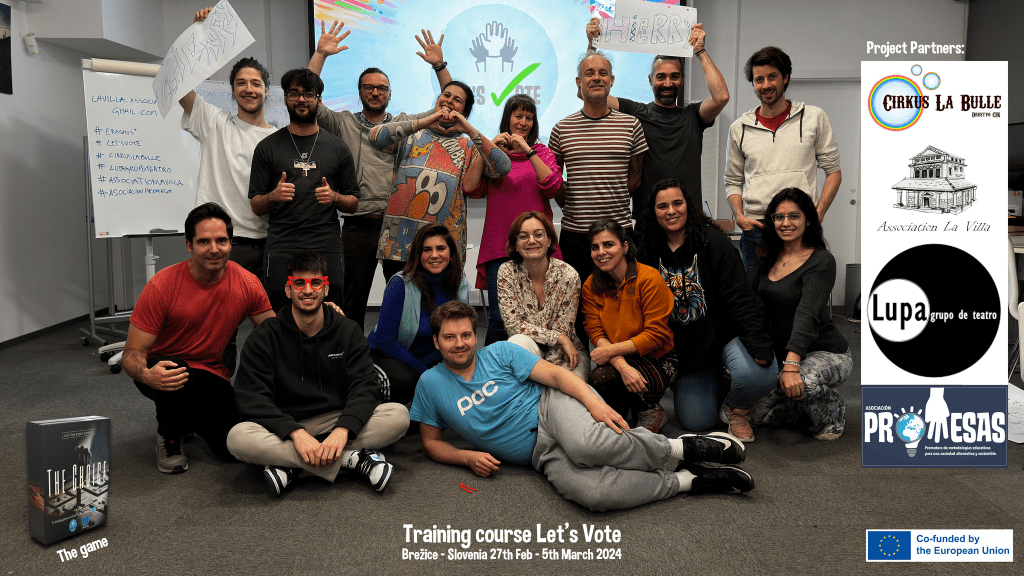
Last week, from the 27/02 to the 05/03, was the Erasmus+ training course “Let’s Vote” in Brežice, Slovenia, and it was incredible !
The trainers organised a whirlwind of learning, sharing ideas, and sparking meaningful conversations about the power of civic engagement for participants coming from Spain, France, Portugal and Slovenia. From workshops to debates, we dove deep into understanding the importance of our voices in shaping our communities.
We feel inspired and empowered to make a difference!
Huge thanks to everyone involved for making it such a memorable experience.
Let’s keep the momentum going!
Here is what participants had to say about it:
MARKO:
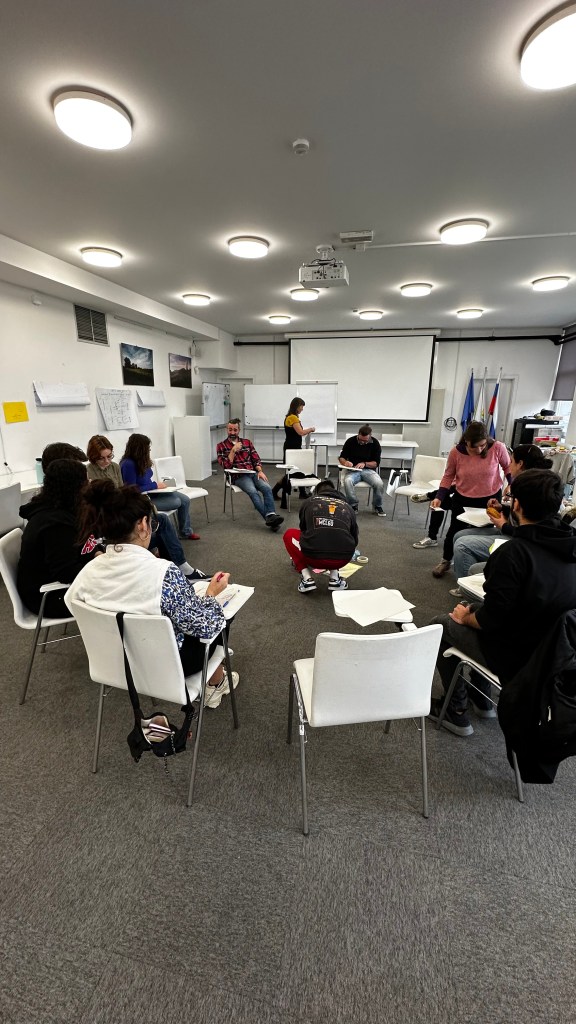
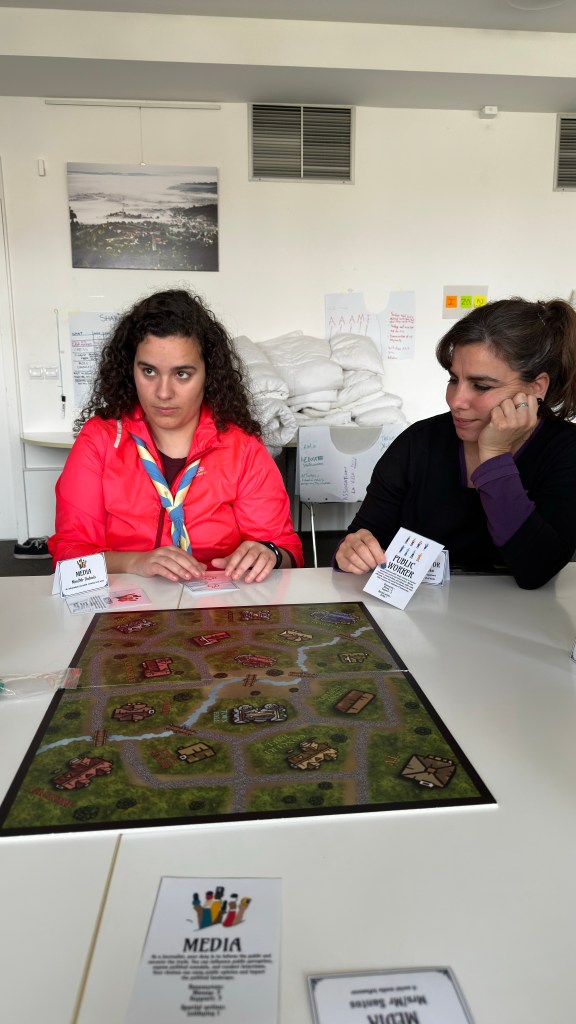
Initially hesitant about joining the Erasmus+ training course on voting, I’ve found it remarkably eye-opening and invigorating. From the start, it promised to be an exhausting yet rewarding journey into interactive learning, emphasizing civic engagement and voting’s importance. The exceptional team of instructors played a pivotal role, guiding and pushing us to our fullest potential despite the course’s demands. Their infectious passion fuelled our enthusiasm for active citizenship. Heated discussions encouraged diverse perspectives, fostering learning and growth. Amidst the seriousness, the board game “The Choice” stood out as a brilliant simulation of real-life decision-making, illustrating voting’s power and responsibility. Equipped with newfound knowledge and skills, I feel empowered to educate young people about their civic choices, ready to be a catalyst for change in my community and beyond.
TEO
“Let’s vote!”
The place that changed my view on the politics of everyday life, my view on the importance of knowing the systems you’re a part of and the enjoyment of a civil debate with people from different cultures. Loved it!
PAULINE
I participated in Let’s vote workshop and I learned much more that I expected.
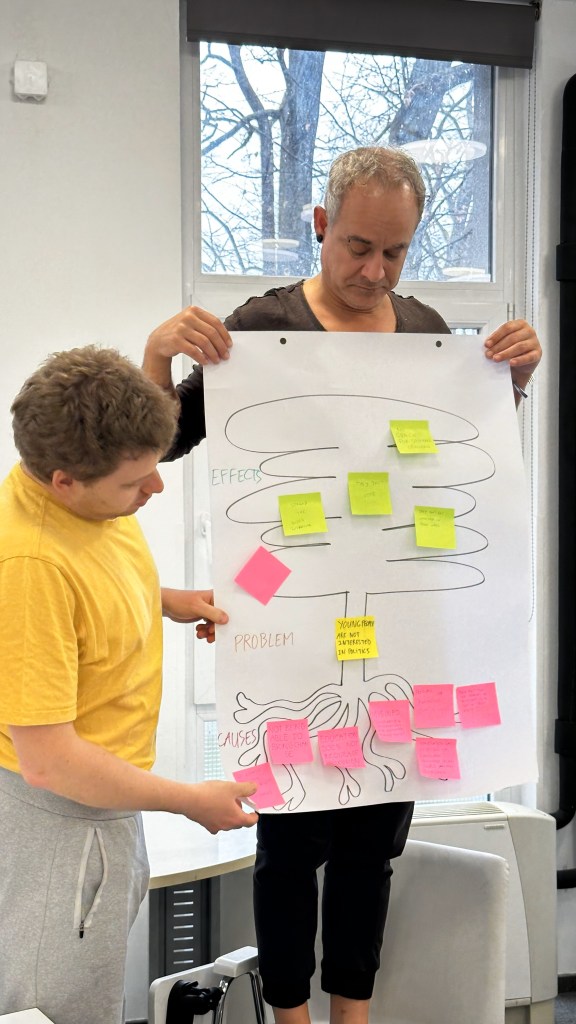
I discovered very interesting tools to brainstorm with youngsters, to make them connect with their own civic engagement and start to do actions in their local community.
We played 2 times the game “The Choice” and it made me realized how big can be our impact in society if we are involved.
Ana
I really loved participating in this project. I learned new technics and concepts and met really interesting and lovely people. Congratulations on the organization and facilitating. Can wait to spread the word in Portugal!
 lets-vote.org